
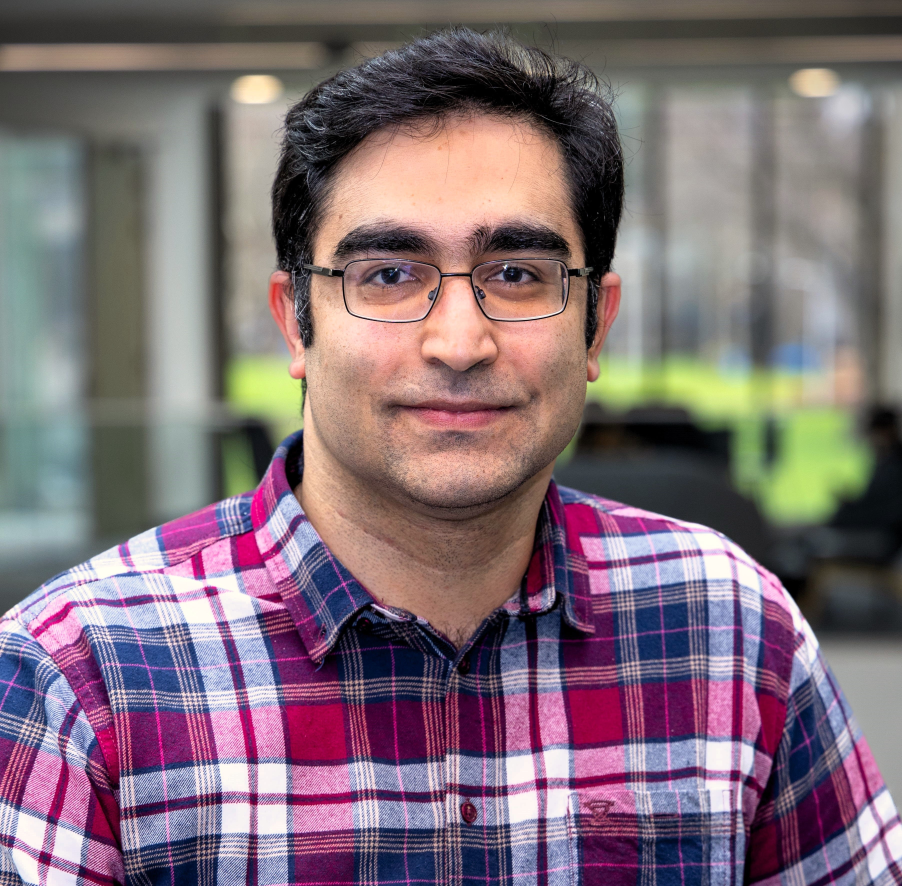
Dr. Omid Shahrokhi
Research Fellow
School of Engineering & Physical Sciences, Institute of Mechanical, Process & Energy Engineering, Heriot-Watt University, Riccarton, UK
Biography
Dr. Omid Shahrokhi is a Research Fellow specializing in underground hydrogen and CO2 storage at RCCS. He holds a BSc and MSc in Petroleum Engineering from Sharif University of Technology in Iran and a PhD in Petroleum Engineering from Heriot-Watt University in the UK. Dr. Shahrokhi’s research expertise spans multiphase flow in porous media, geological energy storage, CO2 sequestration, and large-scale energy storage solutions for decarbonizing industrial clusters.
His research journey began as a Research Assistant with the EOR Research Group at Sharif University of Technology, where he developed methods for studying CO2 Enhanced Oil Recovery and Reservoir Characterisation. He was awarded the James-Watt Scholarship to allow his PhD research at Heriot-Watt University focused on two- and three-phase flow characterisation in porous media, particularly in hydrophobic carbonates. He acquired extensive experience working with high-pressure systems that provide reliable data for modelling CO2 storage and EOR processes and has developed both manual and automated data acquisition workflows for studying cyclic injection methods like WAG injection. He was awarded the SPE Student Bursary during his studies.
Post-PhD, Dr. Shahrokhi joined the Research Centre for Carbon Solutions (RCCS) at Heriot-Watt University as a Research Associate. Under the guidance of Prof. Mercedes Maroto-Valer, he led the work package two of the MILEPOST project, focusing on dynamic flow experiments. In this role, he supervised PhD students and developed high-pressure, high-temperature experimental rigs and automated data acquisition methods for studying reactive flow in porous media. His contributions include the development of:
- A microfluidics rig for visualising pore-scale multiphase flow mechanisms.
- An insitu imaging coreflood rig coupled with a micro-computed tomography rig.
- A coreflood rig for conducting cm-scale studies at reservoir conditions.
- Automated workflow for pore scale imaging of multiphase flow within rock samples via X-ray micro-computed tomography.
- IFT and contact angle measurement rig.
- MATLAB Code for automated contact angle measurement from MicroCT images of multiphase flow in rocks.
- LabView Workflow for Automated Data acquisition and analysis of coreflood data.
Dr. Shahrokhi has contributed to developing multi research institution UKRI and EPSRC bids and secure funding for two research projects (IDRIC MIP3.2 and MIP7.4), which focus on large-scale hydrogen (H2) storage and hydrogen transport networks for decarbonizing UK industrial clusters. These projects involved collaboration with leading researchers from the British Geological Survey (BGS) and the University of Manchester.
Dr. Shahrokhi is deeply interested in exploring how underground energy storage solutions can facilitate the transition of energy vectors, such as electricity and hydrogen, to net-zero. He currently contributes to the ENSIGN project, which examines how different energy vectors and industrial clusters can enhance future electricity networks by reducing operational costs and carbon emissions.
His professional affiliations include membership in European Association of Geoscientists and Engineers (EAGE), Society of Core Analysts, Society of Petroleum Engineers (SPE), and Interpore.
Roles & Responsibilities
Research, MSc and PhD Supervision
Research interests
Main research areas:
- Study of multiphase flow in porous media via pore-scale imaging,
- Geological energy storage,
- CO2 sequestration,
- Large-scale energy storage (with a focus on H2) for decarbonizing industrial clusters,
- Reservoir characterisation.
Other Research Interests:
- Digitalising energy assets,
- Employing algorithms (mainly Python, MATLAB and C#) for automating data acquisition and analysis,
- Economic costing of decarbonizing energy systems.